Case Study: How NHW Uses Climate Risk Analysis to Prepare Its Housing Portfolio
Climate risk analysis gives Nassauische Heimstätte | Wohnstadt a clearer picture of how heat and flooding could affect residential properties in Frankfurt today and over the coming decades.
For owners of large residential portfolios, climate risk needs to be understood at the level of individual properties. The key questions are where exposure is greatest, how conditions may change over time, and which locations may need adaptation first.
Nassauische Heimstätte | Wohnstadt (NHW) worked with meteoblue and Sustainable AG to examine these questions for residential properties in the Frankfurt area. The analysis focused in particular on two physical climate hazards with very different implications for buildings and residents: heat and flooding.
Using climate and hydrological data, the study examined 13 example locations and assessed how exposure could develop over time. The results provide NHW with more detailed basis for evaluating climate risks at individual locations and considering appropriate adaptation measures.
The customer: a large residential portfolio with long planning horizons
With more than 60,000 residential units across over 120 municipalities, NHW is one of Germany's largest housing providers. As a member of the Initiative Wohnen.2050, the company is also actively engaged in the transition towards a climate-neutral housing sector.
For a housing provider of this scale, climate change has direct implications for long-term portfolio management. Buildings renovated or adapted today may still be in use several decades from now, when temperature and precipitation conditions could differ substantially from those experienced today.
At the same time, climate exposure is highly location-specific. Properties within the same city or region can face very different levels of heat or flood risk. So to plan effectively, property owners need not only broad regional climate projections, but also the information that can be related to individual buildings and locations.
The challenge: understanding what climate change means for individual properties
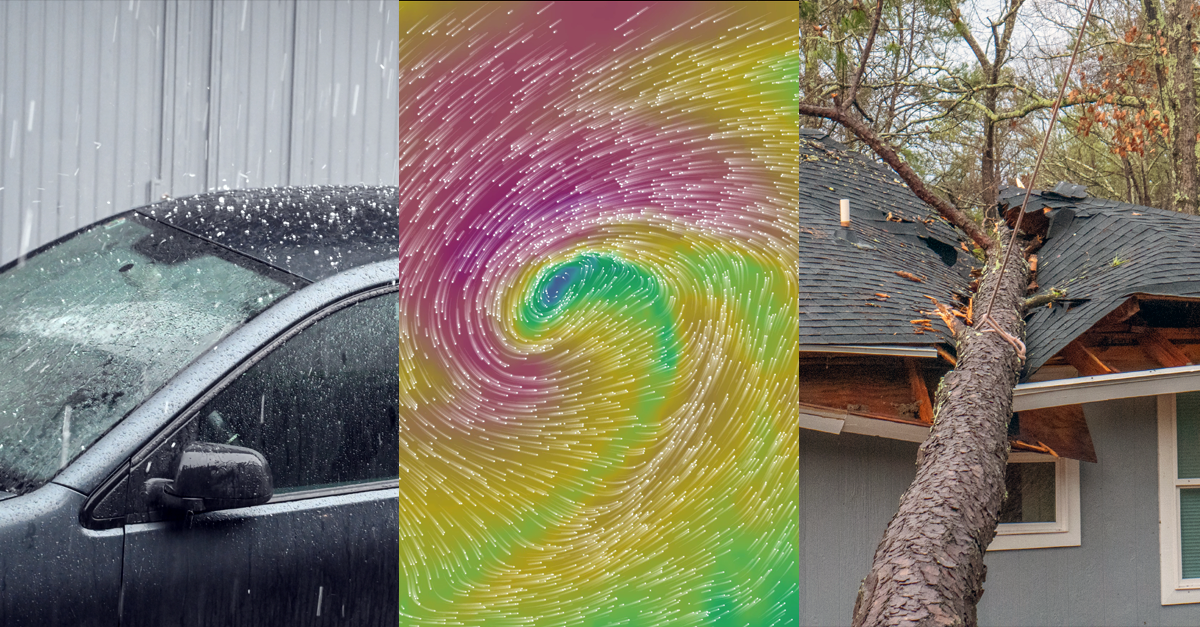
Rising temperatures and more frequent extreme weather can create several challenges for residential buildings.
Heat is one of them. Longer and more intense heatwaves can increase indoor temperatures and place additional stress on building materials, including the potential for cracks and deformation. Prolonged periods of heat can also affect residents, with older people, children and people with disabilities among the groups that may be particularly vulnerable.
Flooding presents a different set of risks. Heavy rainfall can become especially problematic where sealed surfaces, insufficient retention capacity or weak drainage allow water to accumulate. Possible consequences include moisture damage, mould, flooded basements and ground floors, as well as damage to building structures.
For NHW, the analysis needed to show how climate risks could develop at individual locations and provide a practical basis for future building and adaptation measures.
The approach: connecting climate information with property-level risk
NHW carried out the climate risk analysis together with meteoblue and Sustainable AG.
The partners contributed different areas of expertise. meteoblue provided high-precision climate data and models together with expertise in climate-related impacts. Sustainable AG contributed risk assessment, including the consideration of impacts and vulnerability as well as adaptation and reduction measures.
This approach allows climate risks to be assessed for individual properties, not just at a broader regional level.
Evaluating future heat exposure
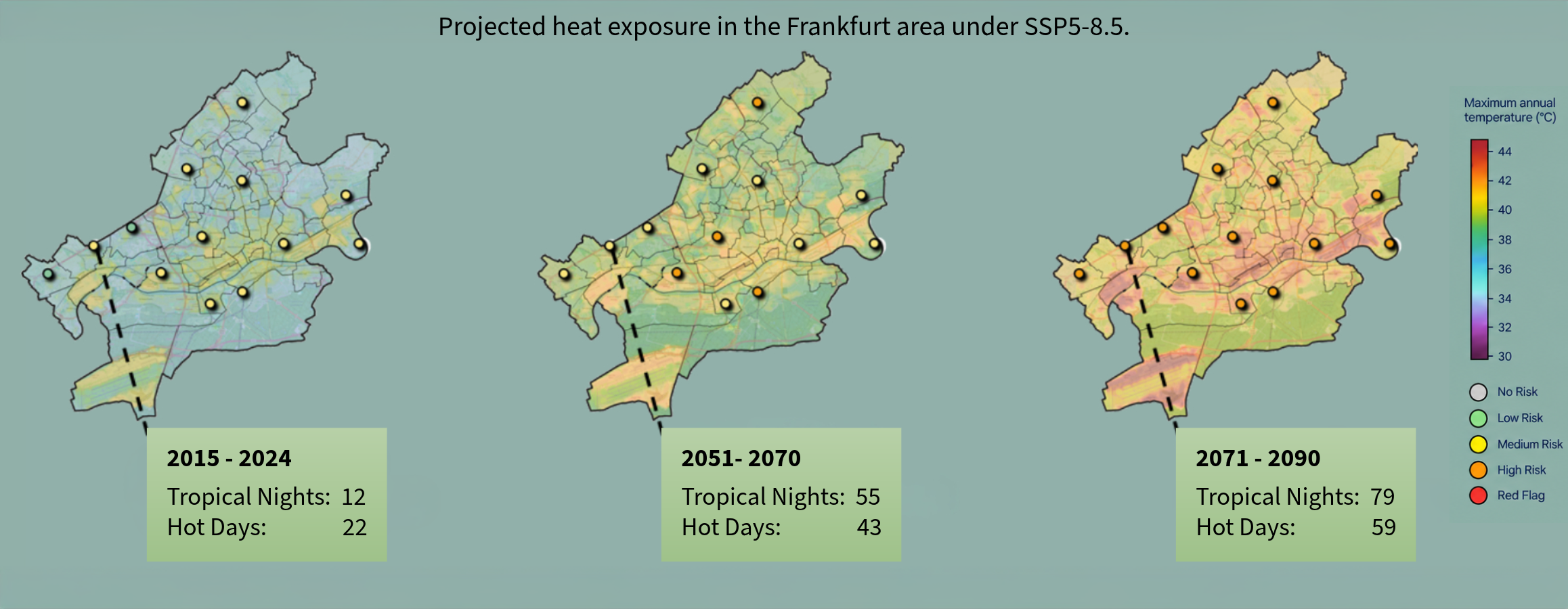
For heat, the analysis examined maximum temperatures in the greater Frankfurt area under the SSP5-8.5 scenario. Climate risk was represented using a five-level scale, with the highest category highlighting particularly extreme climate hazards. Results were presented for 13 example locations.
The findings point to a clear increase in heat exposure over the coming decades.
For 2015-2024, the analysis shows 12 tropical nights and 22 hot days at the example locations. Under SSP5-8.5, this increases considerably by the middle of the century: for 2051-2070, the study indicates 55 tropical nights and 43 hot days. By 2071-2090, the figures rise further to 79 tropical nights and 59 hot days. Temperatures above 40°C also become possible towards the end of the century.
The increase in tropical nights is highly relevant for residential buildings. Warmer nights give buildings less time to cool down after hot days, potentially leading to prolonged periods of elevated indoor temperatures.
The change is substantial: tropical nights increase from 12 to 79 across the periods considered, while hot days rise from 22 to 59. For property managers, these figures show how much conditions around residential buildings could change over the coming decades.
Flood risk: local conditions make a difference
Flood exposure was analysed separately because it depends on a different set of physical factors.
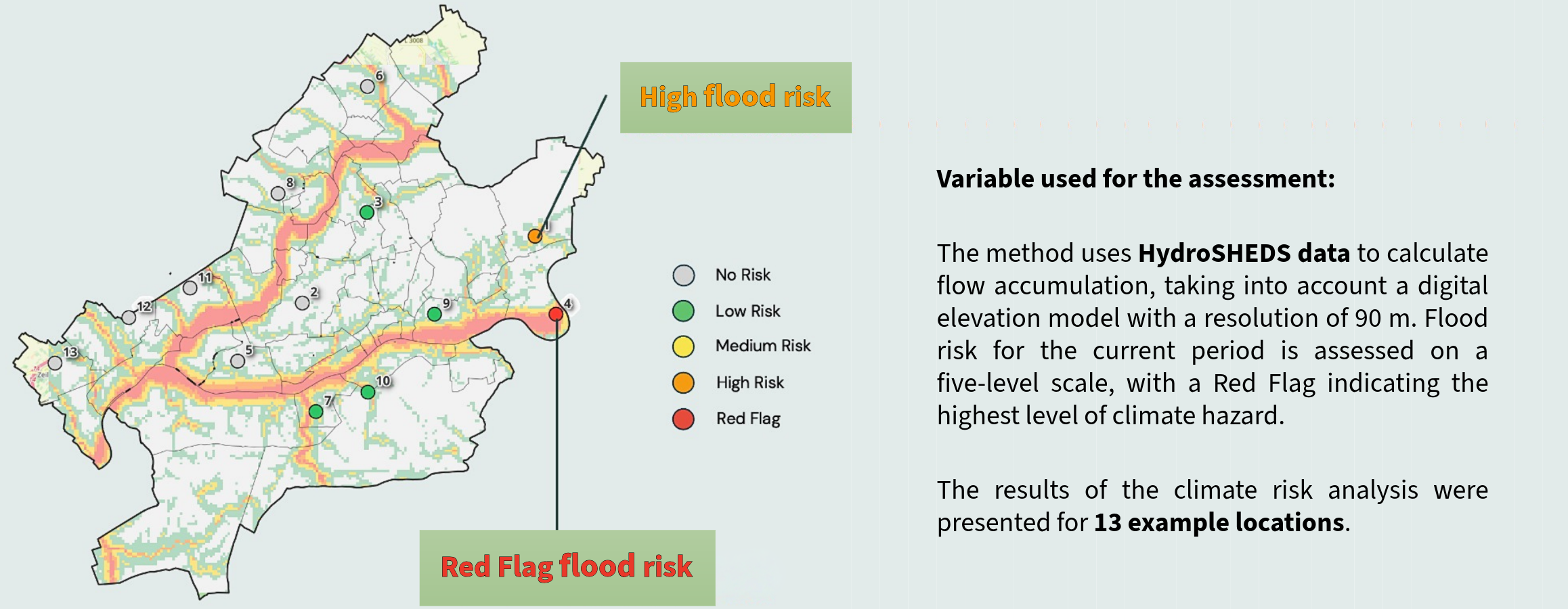
The method used HydroSHEDS data to calculate flow accumulation while also considering a digital elevation model with a spatial resolution of 90 metres. Current flood risk was then evaluated using a five-level scale, including a Red Flag category for particularly high levels of climate hazard. As with the heat analysis, results were presented for 13 example locations.
This local perspective is important because flood risk can differ considerably over relatively short distances. Terrain, surface sealing, water retention and drainage all influence how water behaves during heavy rainfall.
For owners of large property portfolios, this means that the same adaptation measure will not necessarily be appropriate everywhere. Some locations may require closer attention to flood protection and water management, while others may face more significant challenges from heat.
Using the results for adaptation
The roadmap presented in the project consists of five stages. It begins with determining which climate hazards are relevant to the portfolio and then assessing those risks at property level. Suitable adaptation measures can subsequently be developed and incorporated into strategy and building planning, with the longer-term objective of improving climate resilience.
Based on the identified risks, NHW can prioritise measures for individual properties, including building adaptations, greener outdoor areas, water management and flood protection, heat-absorbing materials, better insulation, efficient cooling and ventilation systems, and measures to inform and involve residents. The right combination depends on the main risk at each location, whether heat, flooding or both.
The impact: setting adaptation priorities
The main value of the project is a more detailed view of long-term climate risk. NHW can see how exposure differs between individual locations, how these risks may develop over time, and where further assessment or adaptation may be needed. The analysis does not mean that every location requires immediate intervention. Instead, it provides the information needed to distinguish between different levels and types of exposure.
Climate risk analysis for long-lived assets
Real estate is only one example of an industry where today's investments need to remain viable under tomorrow's climate.
For organisations managing buildings, infrastructure or other long-lived assets, climate risk analysis can help answer three fundamental questions: What are we exposed to? How could that exposure change? And where should we focus our attention?
meteoblue provides the climate data, modelling and expertise needed to examine these questions at individual sites and across larger portfolios.
Would you like to understand how physical climate risks such as heat and flooding could develop across your assets? Contact us to learn more about climate risk analysis for your portfolio.