The Future of Weather Services Is API-Driven
Weather Data Is No Longer Just for People – It's for Software
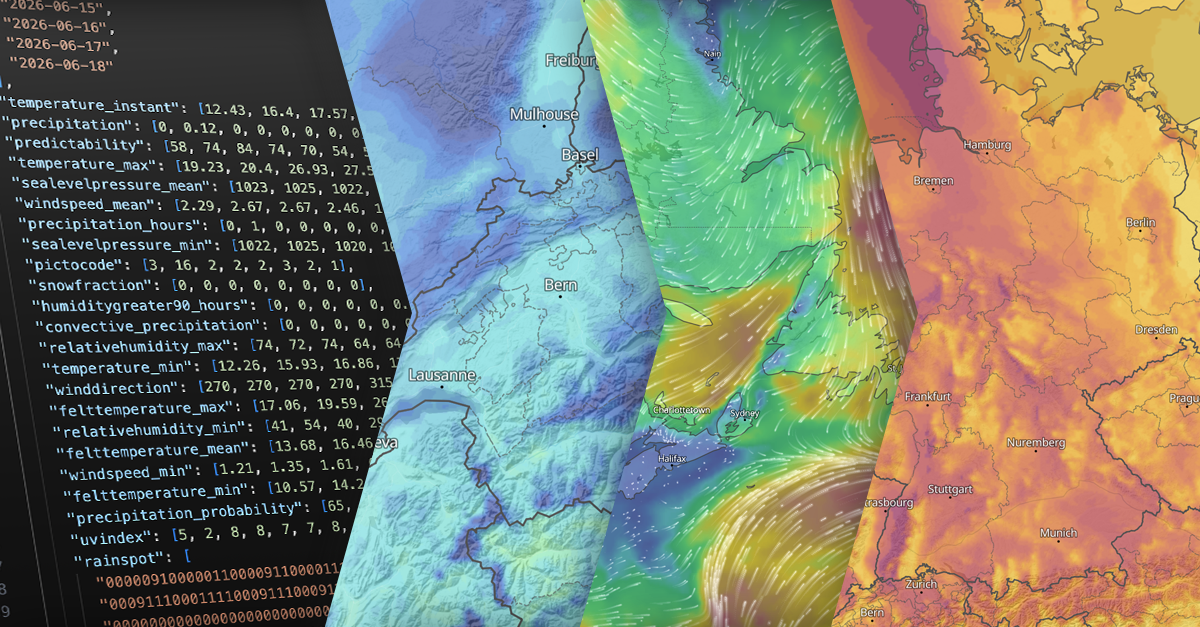
Weather data is becoming increasingly embedded in digital workflows. In many cases, forecasts are no longer consumed by people first – they are consumed by software.
Route optimisation platforms, renewable energy management systems, agricultural applications, climate risk models, digital twins and urban planning tools all rely on weather data flowing directly into automated workflows. The result is a rapidly expanding market for weather APIs.
A Growing Market
Recent market analyses estimate the global weather API market at approximately USD 872 million in 2025, with projections exceeding USD 1.2 billion by 2034. Growth is being driven by digitalisation across sectors such as energy, transport, agriculture, insurance and climate risk management, alongside the increasing adoption of AI, IoT devices and real-time decision support systems.
From Forecast Displays to Operational Intelligence
This evolution reflects a broader change in how weather information is used. Organisations are moving beyond simple forecast displays towards systems that continuously ingest meteorological data and convert it into operational decisions.
- Energy: Weather APIs support renewable generation forecasting, grid management and infrastructure protection.
- Logistics: They help optimise routing and anticipate disruptions.
- Agriculture: They contribute to irrigation planning, field operations and yield optimisation.
Why Forecast Quality Now Matters More Than Ever
As weather data becomes embedded deeper into operational processes, forecast quality becomes increasingly important. Access to weather data alone is no longer enough. Businesses need reliable forecasts, global coverage, high-resolution modelling, historical datasets, climate information, warnings and APIs capable of operating at scale across thousands of locations.
This is where the future of weather services is heading: weather intelligence delivered directly into business systems, enabling faster and more informed decisions without manual interpretation at every step.
At meteoblue we support this transition through a portfolio of APIs covering forecasts, historical weather data, climate information, measurements, warnings, weather maps and specialised datasets for sectors including energy, agriculture, transport, urban resilience and sustainability. Our modelling infrastructure combines more than 30 weather models and data from over 250,000 weather stations worldwide to deliver weather intelligence at global scale.
Learn more about meteoblue Weather APIs.